QualificationAccredited Investors Only Reg D 506(c)
Owner/operator of U.S. manufactured-housing communities, ranked by lots owned.‡
Scroll
Built on needs. Not trends.
Two things make manufactured housing different: the income it produces, and how it behaves when the economy turns. Freedom Fund X owns the communities that produce both.
Six REIT sectors, each indexed to 100 at the start of 2000. Manufactured housing compounds fastest at +4.7% a year; all equity REITs — the benchmark — run +2.3%, and office trails at +1.2%.
Annual NOI growth — positive all 26 yearsRecession years — growth stayed positive
Industry NOI growth · positive every year, 2000–2025¹
Twenty-five annual steps and every one is above zero — through the dot-com bust, the global financial crisis and the pandemic. The average year ran +4.7%; the slowest, 2004, still grew +1.65%.
Manufactured housing has compounded the most value and swings the least — the lowest beta of all six, including self storage, the sector closest to it on value. Storage sits at 1.03, just above the market and 0.30 higher than manufactured housing on the same measure.
Sector value and volatility · manufactured housing vs. the field
Cumulative value: Green Street's index level by sector — how far property values have compounded, not total return. Volatility: beta, how much a sector's listed owners move when the market moves. 1.00 = moves with the market. Manufactured housing leads on one and sits lowest on the other.
Land holds the value · the fund holds the land
The resident owns the house; the fund owns the ground. Between 2012 and 2023 American land prices rose more than five times as fast as the structures standing on them — and land went from about a third of what a home is worth to more than half. In a land-lease community that is the half the fund holds.
Manufactured-housing communitiesTotal multifamily guaranty book
Payment strength · zero serious delinquencies through 2020
“Recession resistant” is an adjective; this is a count, published by Fannie Mae about loans it holds itself. Through 2020 — the year every other property type broke — the entire manufactured-housing book recorded no serious delinquencies at all, against 0.98% across total multifamily.
Sector value and volatility — the six categories drawn
Sector
CPPI index level (Jun 2026)
From 2022 peak
Beta (5Y)
Beta read from
Manufactured housing
296.7
−8%
0.73
cap-weighted ELS · SUI · UMH
Self storage
244.7
−22%
1.03
cap-weighted PSA · EXR · CUBE · NSA
Industrial
225.5
−11%
1.32
PLD
All property
132.9
−14%
0.99
VNQ
Mall
96.6
−1%
1.33
SPG
Office
75.1
−34%
1.04
BXP
Green Street CPPI — all twelve sectors, June 2026
Sector
Index level
From 2022 peak
Manufactured housing
296.7
−8%
Self storage
244.7
−22%
Industrial
225.5
−11%
Student housing
165.0
−4%
Apartment
153.5
−19%
Health care
134.3
−11%
All property (benchmark)
132.9
−14%
Strip retail
128.6
−2%
Data center
119.4
−7%
Lodging
103.4
−9%
Mall
96.6
−1%
Net lease
94.9
−18%
Office
75.1
−34%
Land holds the value · the fund holds the land
Measure
Value
Land — price growth 2012–2023
+261%
Structures — price growth 2012–2023
+49%
Land share of home value, 2012
35.7%
Land share of home value, 2023
57.4%
Payment strength · zero serious delinquencies through 2020
Year
Manufactured-housing communities
Total multifamily guaranty book
2015
0.00%
0.07%
2016
0.00%
0.05%
2017
0.00%
0.11%
2018
0.00%
0.06%
2019
0.00%
0.04%
2020
0.00%
0.98%
2021
0.06%
0.42%
2022
0.02%
0.24%
2023
0.14%
0.46%
2024
0.13%
0.57%
2025
0.07%
0.74%
¹ Illustrative, from third-party industry sources — not Fund results. Past performance does not guarantee future results. Important limitations apply to every figure in this exhibit. Read the full sources & disclosures →
27.9506° N · 82.4572° W
Time in. Not timing.
A structure built for full market cycles — patient capital, with distributions targeted quarterly along the way.
Integrated. Aligned. Investor-friendly.
The structure of the Fund, coupled with the experience
of the team, is designed to serve investors first.
Every figure below pulls from the same offering
model that powers the platform today.
An investment in Freedom
Fund X, LLC is speculative and illiquid and involves substantial risk, including possible loss of all invested
capital. See “Risk Factors” in the PPM.
Beneficial features.
Six structural advantages, built into the Fund.
Low correlation
Manufactured housing has demonstrated low correlation to the broader market.
Tax efficiency
Accelerated depreciation and cost segregation may deliver tax benefits to investors.
Return of capital
We look to refinance as conditions allow and return a portion of equity to investors.
Capital preservation
Diversified across communities, markets and geographies.
Prudent leverage
Initial loan-to-value targeted near 50%, sized to protect income.
Amortization
Tenants pay down the debt, building equity and long-term wealth.
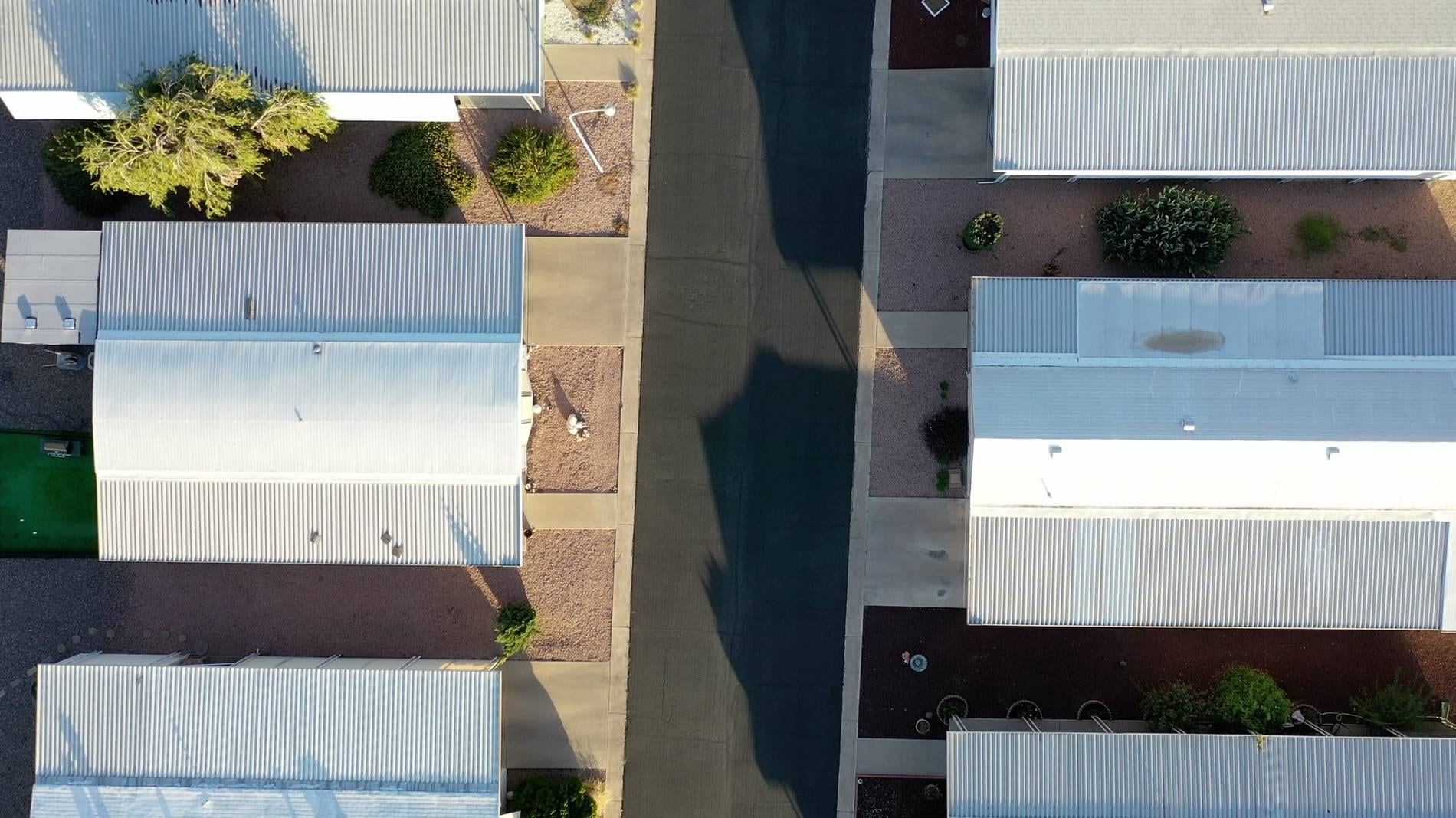
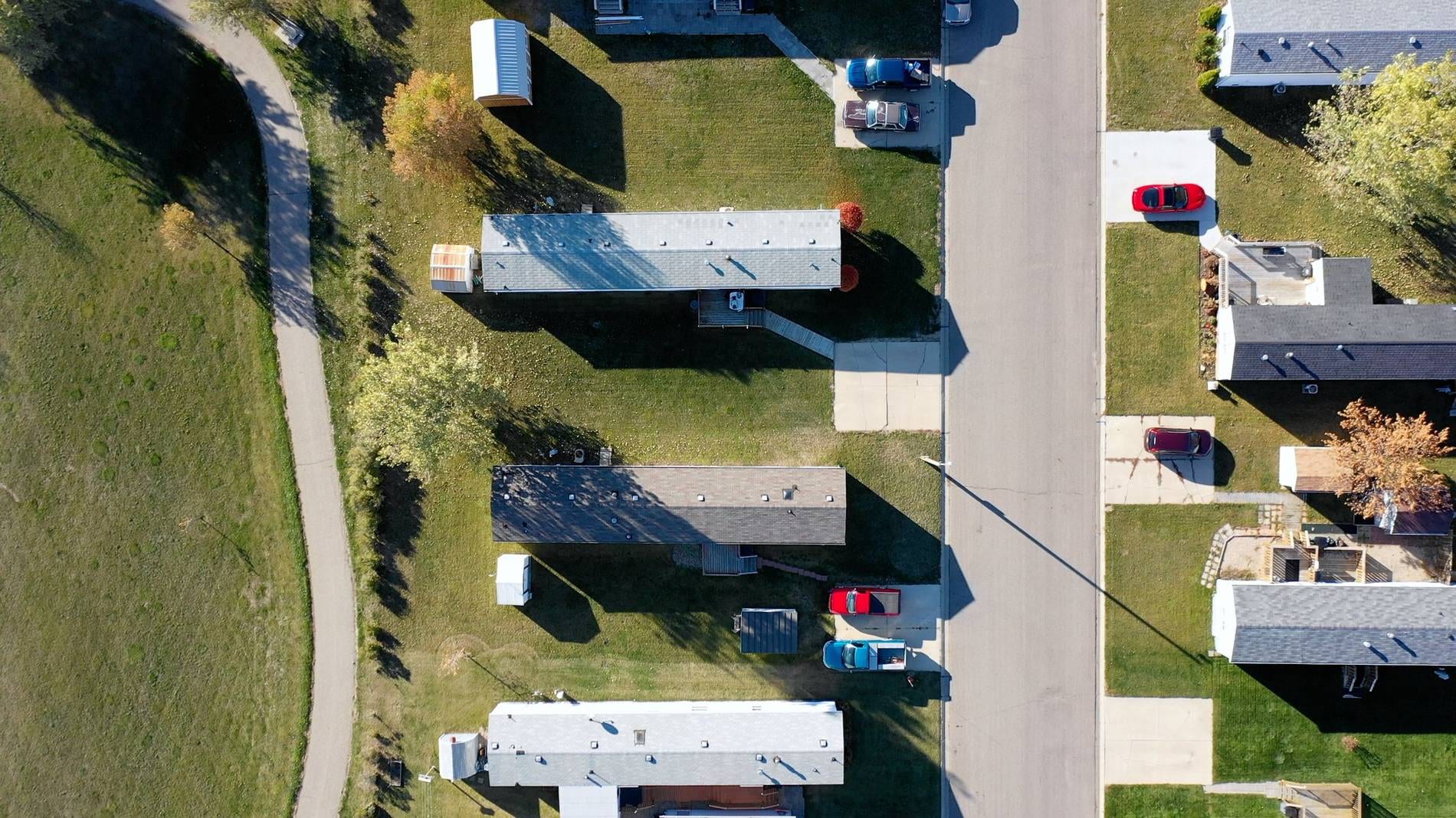
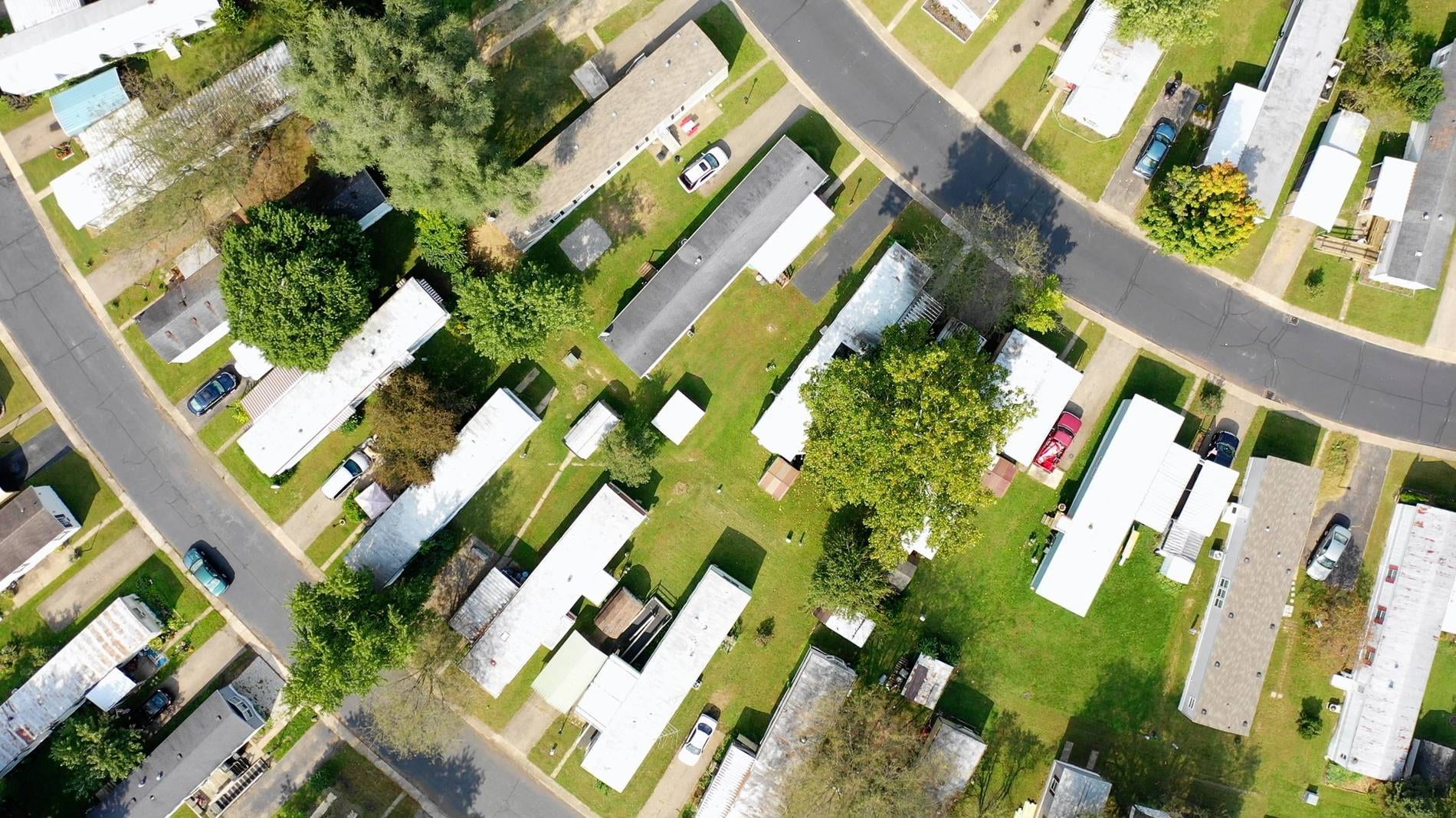
Communities · From aboveParks shown are not assets of the Fund · illustrative only
Private rooftops. Not public ticker symbols.
Land under homes. Rent that recurs. An asset you can stand on — and see from above.
Significant experience for a singular purpose. You.
There is no substitute for experience
140+
years of hands-on ownership and operation of manufactured-housing communities.
Top 17owner/operator of U.S. manufactured-housing communities, by lots owned.‡
Company records, August 2026. Years are approximate and rounded to the whole year.
Multiple executives bring more than 20 years of experience each, owning and operating manufactured-housing communities through every market event since the Global Financial Crisis.
The team's backgrounds run through large banks and the private-equity firms that rolled up the space: institutional-quality leadership, applied to Main Street assets. Institutional buyers have acquired communities from affiliates of the Manager.
A deep bench of talent oversees every aspect of the business: acquisitions, accounting, infill, home sales, construction management, repairs and maintenance, leasing, HR and more.
Ryan Smith
Principal
Co-leads the platform's investment strategy, drawing on two decades in manufactured housing and self-storage.
Jamie Smith
Principal
Co-leads the platform's strategy, capital relationships, and long-term direction.
Ashley Ingersoll
Chief Operating Officer
Leads operations across the portfolio, turning underwriting plans into performance.
Jennifer Benoit
Chief Financial Officer
Leads finance, fund administration, and investor reporting.
The Wider Team
Brittany Antich
Director, Sales & Inventory
Michigan
Ron Steed
VP, Construction
Missouri
Lenka Padelova
VP, Internal Operations
Michigan
Supported by 100+ people across the platform: operations, finance, construction, regional leadership, and the on-site community teams who run our properties every day.
Prior projects.
Prior project · Affiliate
Biscayne Bay
Prior project · Affiliate
Cypress Estates
Prior project · Affiliate
Woodridge
Prior project · Affiliate
Briarwood Estates
Prior project · Affiliate
Edgeview Estates
Prior project · Affiliate
Colonial Estates
Prior project · Affiliate
Gillette
Prior projects were sponsored by affiliates of the Manager and its principals. They are shown as background of the team, are not assets of Freedom Fund X, and are not indicative of Fund results.
Read everything.
4 documents. Everything you need to evaluate Freedom Fund X — public files open instantly and confidential files after one quick registration.
Download all documents →
Every document access is recorded. Registration is a self-attestation —
accreditation verification happens separately, before any investment.
Freedom to pursue what moves you.
Register to view
Leave your name, email and phone and we’ll send it over — so you
have your own copy, and so we can reach you if it changes. Or continue
without registering.
A copy of your request is on file. You can close this window — nothing
else is needed from you right now.
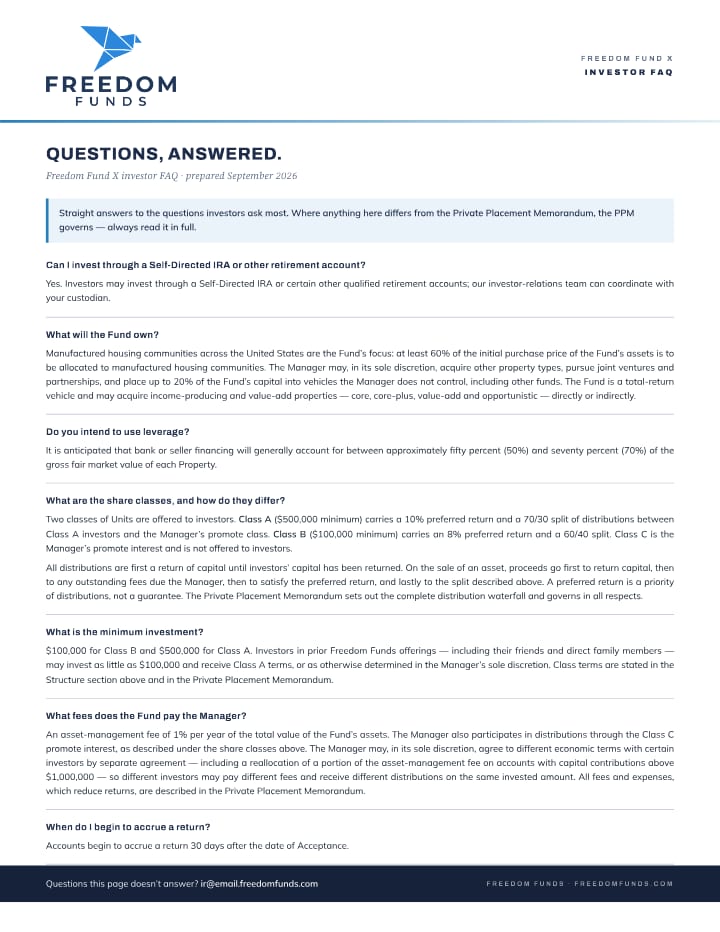
Questions, answered.
Straight answers to the questions investors ask most. Where anything here differs from the Private Placement Memorandum, the Operating Agreement in the PPM governs — always read it in full.
Can I invest through a Self-Directed IRA or other retirement account?
Yes. Investors may invest through a Self-Directed IRA or certain other qualified retirement accounts; our investor-relations team can coordinate with your custodian.
What will the Fund own?
Manufactured housing communities across the United States are the Fund’s focus: at least 60% of the initial purchase price of the Fund’s assets is to be allocated to manufactured housing communities. The Manager may, in its sole discretion, acquire other property types, pursue joint ventures and partnerships, and place up to 20% of the Fund’s capital into vehicles the Manager does not control, including other funds. The Fund is a total-return vehicle and may acquire income-producing and value-add properties — core, core-plus, value-add and opportunistic — directly or indirectly.
Do you intend to use leverage?
It is anticipated that bank or seller financing will generally account for between approximately fifty percent (50%) and seventy percent (70%) of the gross fair market value of each Property.
What are the share classes, and how do they differ?
Two classes of Units are offered to investors. Class A ($500,000 minimum) carries a 10% preferred return and a 70/30 split of distributions between Class A investors and the Manager’s promote class. Class B ($100,000 minimum) carries an 8% preferred return and a 60/40 split. Class C is the Manager’s promote interest and is not offered to investors.
All distributions are first a return of capital until investors’ capital has been returned. On the sale of an asset, proceeds go first to return capital, then to any outstanding fees due the Manager, then to satisfy the preferred return, and lastly to the split described above. A preferred return is a priority of distributions, not a guarantee. The Private Placement Memorandum sets out the complete distribution waterfall and governs in all respects.
What is the minimum investment?
$100,000 for Class B and $500,000 for Class A. Investors in prior Freedom Funds offerings — including their friends and direct family members — may invest as little as $100,000 and receive Class A terms, or as otherwise determined in the Manager’s sole discretion. Class terms are stated in the Structure section above and in the Private Placement Memorandum.
What fees does the Fund pay the Manager?
An asset-management fee of 1% per year of the total value of the Fund’s assets. The Manager also participates in distributions through the Class C promote interest, as described under the share classes above. The Manager may, in its sole discretion, agree to different economic terms with certain investors by separate agreement — including a reallocation of a portion of the asset-management fee on accounts with capital contributions above $1,000,000 — so different investors may pay different fees and receive different distributions on the same invested amount. All fees and expenses, which reduce returns, are described in the Private Placement Memorandum.
When do I begin to accrue a return?
Accounts begin to accrue a return 30 days after the date of Acceptance.
When will distributions likely begin?
Acquisitions are targeted to begin in the first half of 2027, and the Manager’s goal is to begin distributions as soon as practical.
When are distributions made?
Distributions are targeted quarterly, unless otherwise determined by the Manager, and at least annually to the extent the Fund is able, as determined by the Manager.
What kind of reporting will I receive?
Acquisition announcements as they occur. On a quarterly basis the Manager intends to furnish Members with a Fund update, which reports various activities and operations of the Fund. Annually, investors will receive a K-1 and the Fund’s audited financial statements.
How long does it take to accept my capital?
Generally, we try to accept new investments each Friday, but the timing may vary.
Are you a REIT?
No. The Fund is a private limited liability company, expected to be treated as a partnership for U.S. federal income tax purposes — see the Structure section above for how it is organized.
Must I be “Accredited” in order to invest in the Fund?
Yes. The Fund is offering Units under an exemption from securities registration afforded by Regulation D, Rule 506(c), which requires the Manager to take “reasonable steps” to verify that each Investor is Accredited before allowing them admission to the Fund.
“Accredited Investor” is defined in Rule 501(a) of Regulation D, as amended by the SEC in recent years, and includes a number of qualification categories: the income test ($200,000 individually, or $300,000 jointly with a spouse or spousal equivalent, in each of the last two years, with the same expectation for this year), the net-worth test ($1 million, excluding your primary residence), certain professional licenses held in good standing (Series 7, 65 or 82), and several entity categories. The Private Placement Memorandum describes each category and the documentation used to demonstrate qualification; under current SEC guidance, verification can in some cases be satisfied through your subscription materials. For more information, visit investor.gov.
What is the duration of this Fund?
An investment in the Fund should be considered long-term in nature. Investors should be in a financial position that will enable them to hold their Interests for the duration of the Fund, which is projected as up to ten (10) years, or longer, from the date the Fund closes to new capital, or as otherwise determined in the Manager’s sole discretion.
The offering itself is expected to remain open for up to three years, with an initial maximum offering of $25,000,000 that the Manager may increase in increments. Subscription funds are held until the $1,000,000 minimum offering amount is reached.
Is the Fund eligible for a 1031 Exchange?
The Interests being offered are considered for IRS purposes to be personal property interests and are thus not suitable for a 1031 exchange. Investors seeking to do a 1031 exchange should not invest in this Offering.
However, the Company may be able to accommodate large 1031 transactions in a side car on specific property purchases, on a case-by-case basis.
Investors may be able to use Section 721 to contribute property to the Company in exchange for Membership Interests once the Fund has closed to new capital, but such a transaction is subject to negotiation with investors’ financial and other advisors and is subject to the sole discretion of the Manager. If you own a property you would like considered, reach out through the Connect section and the team will take it from there.
Can I sell or transfer my Interests?
An investment in the Fund is illiquid and should be treated as such. The Interests are not registered under securities laws, transferability is substantially restricted, and no public market exists or is expected to develop. See “Risk Factors” in the Private Placement Memorandum.
Who manages the communities day to day?
Property management is in-house: Endeavor Communities, the platform’s dedicated property-management affiliate, runs the assets on the ground — residents, utilities, standards, and capital work.
How do I invest?
Select Invest Now at the top of this page to begin the subscription process online. If you would rather talk it through first, the Connect section has direct lines to the investor-relations team — call, email, or book a time.
A confirmation email with a calendar invitation is on its way.
Meet Carter
Leave your details and Carter will reach out personally.
Thanks — you’re introduced. Carter will reach out shortly.
Ask Carter anything
Strategy, terms, timing, or whether this fits at all — a plain answer, by email, from the team that runs the assets.
Question sent. Carter will answer by email — usually within one business day.
What moves you?
Three taps. No forms yet, no wrong answers.
We don't build the boat or plan the second act — we manage real-asset investments, with real risk, designed so more of your life belongs to you.
Prior project · Affiliate
Biscayne Bay
Prior projects were sponsored by affiliates of the Manager and its principals. They are shown as background of the team, are not assets of Freedom Fund X, and are not indicative of Fund results.
Chart
¹ Sources: NOI record computed from Nareit REIT Industry Tracker, Q1 2026 (underlying data S&P Capital IQ Pro) — same-store NOI, manufactured-housing REITs, Q1 2000–Q1 2026, compounded into calendar years by the sponsor; the cumulative index is an illustrative approximation, not a publisher's series, and sector aggregates rest on 2–3 constituent REITs (listed-REIT results, not private-market results). Sector value: Green Street Commercial Property Price Index, 4 June 2026 release — index level by sector, a measure of property value, not total return (no income component). Betas: StockAnalysis.com, Beta (5Y), retrieved 17 Aug 2026; anchored by NYU Stern (Damodaran), REIT-sector levered beta 0.64, Jan 2026 — listed-REIT equity beta reflects leverage, index membership and public-market sentiment, and may differ materially from directly held property. Sector betas are cap-weighted across each sector's listed constituents (manufactured housing: ELS, SUI, UMH; self storage: PSA, EXR, CUBE, NSA), so they rest on a handful of companies and are not a measure of the private market. Land and structure prices: American Enterprise Institute Housing Center data as reported by the Urban Institute — price growth 2012–2023 and land's share of home value; a national series about homes generally, not a Fund X portfolio measure. Serious delinquency and loan counts: Fannie Mae, "Multifamily Product Overview: Manufactured Housing Communities," July 2026, data as of 31 Dec 2025 — loans in Fannie Mae's own guaranty book (3,215 MHC loans acquired 2005–2025), not an industry-wide default rate, and not a measure of equity returns. Occupancy: Northmarq, manufactured-housing rent and occupancy reporting, FY2025–Q1 2026 (asset-class occupancy), and Sun Communities 8-K, 27 July 2026 (97.8% MH same-property occupancy at 30 June 2026) — figures describe the asset class and third-party operators, not any Fund X property. Relocation cost and move-outs: Sun Communities investor presentation, 1 June 2026 (annual physical home move-outs averaging 0.3%, i.e. 99.7% of homes remain in place), and Elevation Capital Group learning-centre materials (relocation cost $5,000–$15,000). Community and homesite counts: Manufactured Housing Institute, "Manufactured Home Communities in the U.S." (more than 43,000 communities, almost 4.3 million homesites; no data vintage stated by the source — a survey-based count via Freddie Mac puts it near 37,254). Housing-stock comparison: U.S. Census Bureau, American Community Survey 1-Year Estimates, Table B25024, 2022–2024. Market and zoning claims: Elevation Capital Group — Market Research White Paper (Jan 2026). Past performance does not guarantee future results.
Chart data
¹ Sources: NOI record computed from Nareit REIT Industry Tracker, Q1 2026 (underlying data S&P Capital IQ Pro) — same-store NOI, manufactured-housing REITs, Q1 2000–Q1 2026, compounded into calendar years by the sponsor; the cumulative index is an illustrative approximation, not a publisher's series, and sector aggregates rest on 2–3 constituent REITs (listed-REIT results, not private-market results). Sector value: Green Street Commercial Property Price Index, 4 June 2026 release — index level by sector, a measure of property value, not total return (no income component). Betas: StockAnalysis.com, Beta (5Y), retrieved 17 Aug 2026; anchored by NYU Stern (Damodaran), REIT-sector levered beta 0.64, Jan 2026 — listed-REIT equity beta reflects leverage, index membership and public-market sentiment, and may differ materially from directly held property. Sector betas are cap-weighted across each sector's listed constituents (manufactured housing: ELS, SUI, UMH; self storage: PSA, EXR, CUBE, NSA), so they rest on a handful of companies and are not a measure of the private market. Land and structure prices: American Enterprise Institute Housing Center data as reported by the Urban Institute — price growth 2012–2023 and land's share of home value; a national series about homes generally, not a Fund X portfolio measure. Serious delinquency and loan counts: Fannie Mae, "Multifamily Product Overview: Manufactured Housing Communities," July 2026, data as of 31 Dec 2025 — loans in Fannie Mae's own guaranty book (3,215 MHC loans acquired 2005–2025), not an industry-wide default rate, and not a measure of equity returns. Occupancy: Northmarq, manufactured-housing rent and occupancy reporting, FY2025–Q1 2026 (asset-class occupancy), and Sun Communities 8-K, 27 July 2026 (97.8% MH same-property occupancy at 30 June 2026) — figures describe the asset class and third-party operators, not any Fund X property. Relocation cost and move-outs: Sun Communities investor presentation, 1 June 2026 (annual physical home move-outs averaging 0.3%, i.e. 99.7% of homes remain in place), and Elevation Capital Group learning-centre materials (relocation cost $5,000–$15,000). Community and homesite counts: Manufactured Housing Institute, "Manufactured Home Communities in the U.S." (more than 43,000 communities, almost 4.3 million homesites; no data vintage stated by the source — a survey-based count via Freddie Mac puts it near 37,254). Housing-stock comparison: U.S. Census Bureau, American Community Survey 1-Year Estimates, Table B25024, 2022–2024. Market and zoning claims: Elevation Capital Group — Market Research White Paper (Jan 2026). Past performance does not guarantee future results.